
Everyday English for work & migration
The IELTS General Training test is designed for individuals who need to demonstrate practical English skills for work, migration, or everyday life in an English-speaking environment.
It focuses on real-world communication, including workplace interactions, social conversations, and common written tasks such as letters and short explanations. The test assesses how effectively candidates can understand and use English in daily situations rather than academic contexts.

About General Training IELTS Candidate
The IELTS General Training test is designed for individuals who need to demonstrate practical English skills for everyday life in an English-speaking environment. It is commonly required for migration, employment, work experience, and non-academic training programs.
Unlike Academic IELTS, which focuses on academic study and research contexts, General Training IELTS assesses how effectively candidates can communicate in real-life situations. This includes understanding workplace conversations, reading everyday notices and instructions, writing letters, and speaking clearly in social and professional settings.
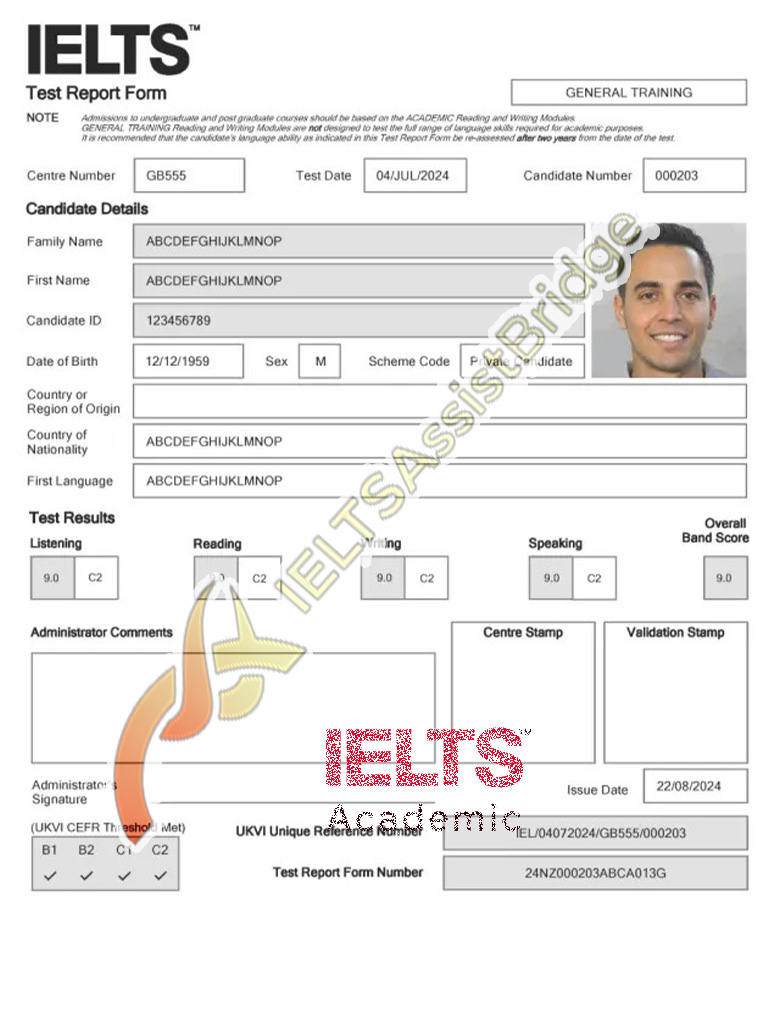
The challenge
Candidates taking the IELTS General Training test face the challenge of demonstrating practical English skills used in everyday life, work environments, and social situations. Unlike academic contexts, the language assessed is functional and purpose-driven, requiring candidates to understand instructions, notices, and workplace communication accurately.
Many candidates must adapt to different task types, such as writing letters for various situations, interpreting real-world reading materials, and responding clearly in face-to-face speaking interviews. The challenge lies in applying English naturally and effectively rather than relying on academic vocabulary or formal writing styles.
Understanding how each section of the General Training IELTS test is structured and what examiners assess in real-life communication is essential for candidates aiming to meet migration, employment, or training requirements.
Preparation Areas Covered:
STRENGTH IN NUMBERS
Test structure & assessment
The IELTS General Training test evaluates a candidate’s ability to use English in real-life situations through four equally weighted language skills. Each section is designed to reflect practical communication used in everyday, workplace, and social contexts.
Listening and Reading are assessed through a fixed number of questions, with band scores calculated from the total number of correct answers. Writing and Speaking are assessed by certified examiners using detailed band descriptors that measure clarity, coherence, accuracy, and effectiveness of communication.
Together, these components ensure that General Training IELTS provides a balanced and reliable measure of practical English proficiency required for migration, employment, and non-academic training purposes
Listening (4 Sections)
General Training Reading (3 Sections)
Writing Task 1 & Task 2
Speaking Interview (3 Parts)
Clear and reliable test assessment
The IELTS General Training test uses a structured and standardized assessment system to evaluate practical English language ability. Each section of the test is designed to reflect real-life communication scenarios commonly encountered in work, migration, and everyday social environments.
All candidates are assessed using clearly defined criteria to ensure fairness, consistency, and reliability across test sessions worldwide. Trained examiners follow official band descriptors when evaluating performance, particularly in the Writing and Speaking sections.
- Listening assessment – Understanding conversations, instructions, and workplace discussions
- General Training Reading – Comprehension of texts related to daily life, employment, and general interest
- Writing Task 1 (Letter) – Writing formal, semi-formal, or informal letters based on practical situations
- Writing Task 2 (Essay) – Presenting ideas, opinions, or solutions clearly and logically
- Speaking interview – A face-to-face discussion assessing fluency, pronunciation, and clarity
4 Sections
Listening · Reading · Writing · Speaking
9-Band Scale
Scores range from Band 1 to Band 9
25% Each
All four skills contribute equally to the overall band score
IELTS Score Conversion (Correct Answers → Band)
Listening and Reading are converted from the number of correct answers. Writing and Speaking are scored using band descriptors.